Dare to persevere – creativity and a long-term perspective that make a difference
 Av Klara Carlsson
March 9, 2026
Av Klara Carlsson
March 9, 2026
AI makes it possible to produce marketing content faster than ever before. Campaigns are created overnight and optimized in real time. But more content at a faster pace doesn’t automatically mean better results—quite the opposite, in fact.
When the Swedish Advertisers Association and NoA Consulting recently analyzed 500 entries in the prestigious 100-wattaren advertising competition, a very different picture emerged. Among the campaigns with the highest return on investment and impact, there are two clear common factors: creativity and a long-term perspective.
But taking a long-term approach doesn’t mean throwing together a campaign and letting it run on autopilot for three years. On the contrary. It’s about creating a message or concept that stands the test of time—and can withstand being repeated. The report’s analysis makes it clear that creativity, combined with perseverance, is what drives the greatest business impact.
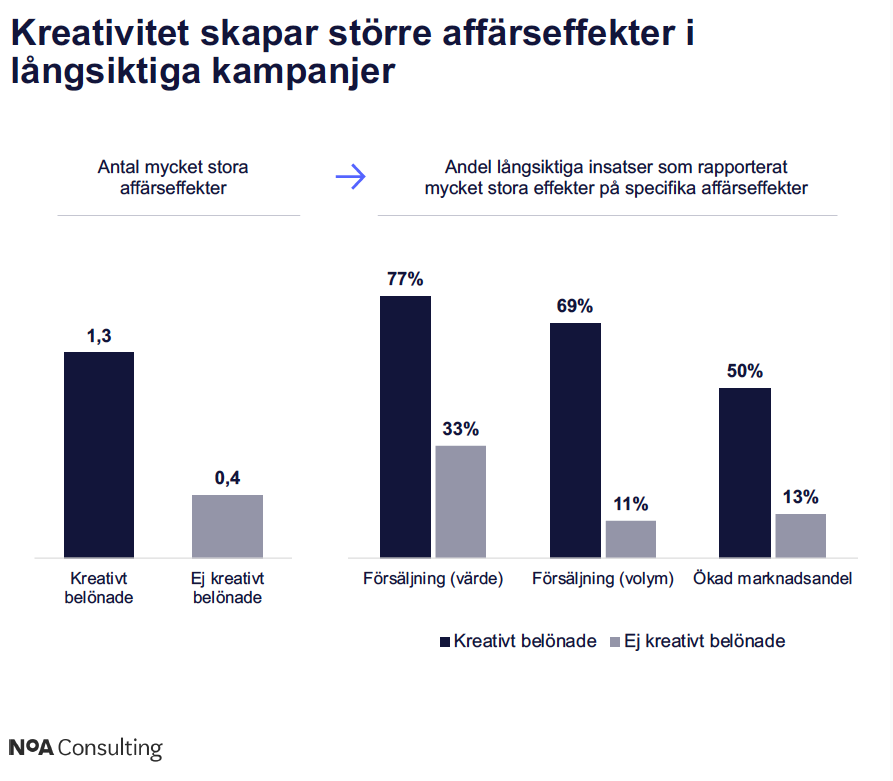
Figure from the report *Communication That Makes a Difference 2025*.
Set aside time for creativity
This means that the creative process needs to start early, right from the planning stage. Give the idea time to develop. Let the team—and ideally others in the organization—get involved in pitching, brainstorming, and refining it. Let the idea mature and settle before you move into production. Only once the core idea is solid is it time to discuss packaging, optimization, and rollout.
At a time when AI is playing an increasingly prominent role in creative work, it’s easy to lose sight of the human element in communication. Images and messages risk becoming generic, and it can be difficult to strike that personal, warm tone that often determines whether something resonates—and thus sticks.
Focus on feelings
Here, too, the report is clear: among the long-term winners, emotions are the primary factor for success, rather than rational arguments. Campaigns that succeed in evoking a response in people—such as a sense of security or community—perform better than campaigns that merely list features, facts, and product benefits.
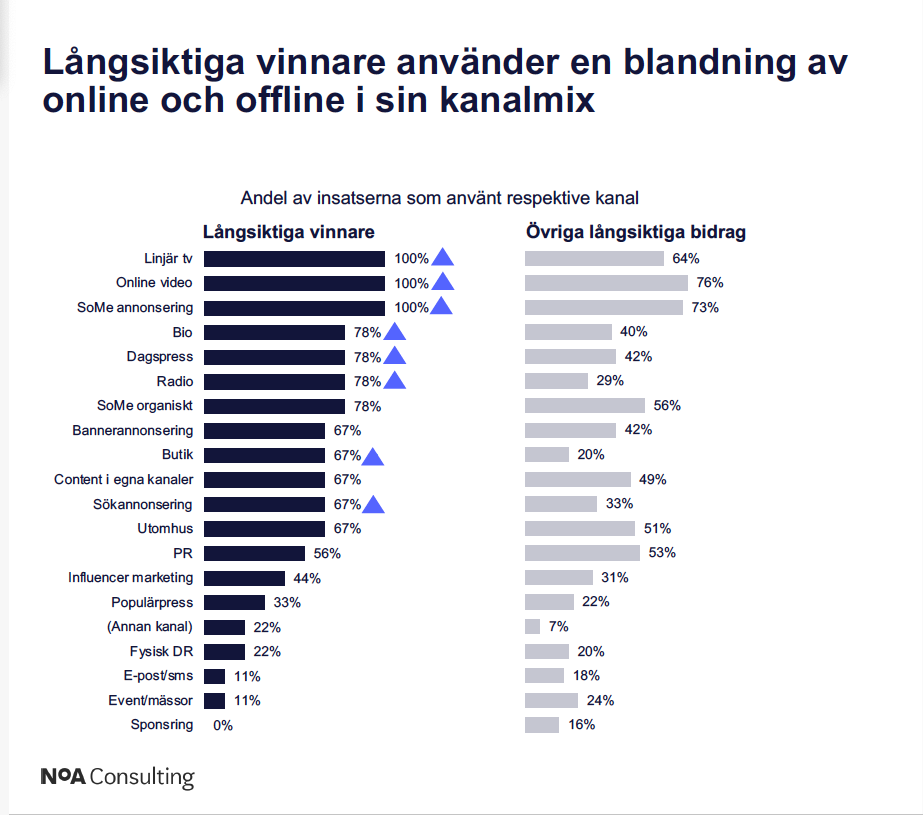
Figure from the report *Communication That Makes a Difference 2025*.
Aim wide
The report also shows that successful campaigns are rarely limited to a single channel. The winners share another common trait: they cast a wide net, both in terms of media mix and target audience. They run simultaneously offline and online, targeting both new and existing audiences. Not by changing the idea—but by tweaking it. The same core idea takes different forms across different channels and situations. When this happens, it creates both reach and repetition, while allowing the concept to endure without feeling worn out.
Dare to hold on
So the next time you’re tempted to change course: stop and think. Have you given the idea a fair chance to take root, grow, and reach more channels and audiences? Often, it’s not a new campaign that’s missing, but the courage to stick with a good one.
What would happen if you gave your best idea another 12 months?

Related posts

What purpose drives your brand?
You probably know that vision and mission are important ingredients in your branding. But did you know that your purpose or "why" is an equally crucial piece of the puzzle? And it's a piece that's growing in importance every day. Today, you could even say that a business without a defined purpose from several perspectives lacks meaning, at least in the eyes of potential customers and prospects. So what is the purpose of your business?

Tagline and payoff – what’s the difference, and how do you create one that stands out?
In the world of communications, there are a multitude of terms that are often used interchangeably, even though they have different origins and sometimes different applications. The short phrase that usually appears alongside a company’s logo—such as Apple’s “Think Different” or Adidas’s “Impossible is Nothing”—is sometimes called a slogan, sometimes a tagline, and occasionally a payoff or motto. But what do these words actually mean, and how are they used today?

Honesty is key when Swedes rank sustainable brands
Despite a tough 2023 with war and inflation, sustainability is still a high priority among Swedish consumers. A survey from Differ shows that honesty and concrete actions are important when companies communicate sustainability and among the brands perceived as most sustainable are SJ and Blocket. We have compiled the main conclusions of the survey.