Winning in Turbulent Times
The victorious Brazilian Formula One driver Ayrton Senna is reputed to have said "You can't overtake 15 cars when the sun is shining, but you can when it's raining". And lately, there has been no shortage of rainfall. A pandemic that just paralyzed the world, rising inflation, a looming recession, high energy prices and the war raging in Ukraine. So then the question is, will you roll into the depot? Or switch to wet weather tires and hit the gas?
What does it take to benefit from a recession?
A survey by consulting firm McKinsey & Co found that a majority of CEOs interviewed have chosen to act defensively in the current volatile environment. Most focus on the threats that exist in the here and now, working on near-term efficiency and managing the balance sheet. But McKinsey finds that some CEOs, in addition to managing the crisis here and now, are embracing volatility and taking advantage of the opportunities that arise.
According to McKinsey, the latter strategy is preferable. Previous studies have shown that companies that have only taken a defensive position in a recession have performed rather mediocre. While companies that have only invested in the future have in some cases succeeded - and in other cases failed completely. The most successful companies are those that have both managed the downturn and at the same time actively invested in taking advantage of opportunities in a shaky market. And the most successful management teams are those that excel in insight, commitment and execution.
Because when volatility is high, a head start in terms of insights is an advantage. Any stockbroker knows that. According to McKinsey's analysis, the same is true for successful companies. For example, it is important to quickly identify behavioral and value changes in target groups and have the digital infrastructure to act on them. In terms of engagement, it's about having the courage to act while others wait and investing boldly enough in what sets you apart. And when it comes to execution, the key to success is having the ability to act quickly, which requires you to have broken down all the silos in your organization and have effective decision-making processes.
The right marketing pays more dividends when others cut back
Another important factor in taking advantage of a recession is marketing. When the going gets tough, it's an easy decision to cut the marketing budget; there are rarely any immediate consequences for either production or staff. At the same time, it is a counterproductive decision, because those who dare to invest in visibility in a recession are the ones who will be winners when things turn around. And it should be remembered that, according to data from the US National Bureau of Economic Research, a recession usually lasts no longer than around 11 months (with the exception of the 2008 financial crisis).
In the article "How to market in a downturn" published in the Harvard Business Review in 2009, the authors analyzed what companies that successfully navigated the recession had in common and what patterns could be discerned in their marketing. Among other things, they found that it was a matter of marketing the company's advantages even more clearly and forcefully, but doing so in relation to the new context that arises in a recession. Articulating the arguments that strengthen the offer in tougher times.
Keep up with your target audience's values
One example they highlighted was the Dutch diamond seller De Beers, which after the 2008 financial crisis initially reduced its marketing budget because it thought demand would drop significantly. After all, diamonds might not be what people would treat themselves to in a recession. But after conducting market research that showed that for a majority of consumers, diamonds represented 'eternal value', they chose instead to double their marketing budget for Christmas. The campaign message focused on buying 'fewer but better things' because 'a diamond is forever'. Consumption during Christmas was down overall, but demand for diamonds remained at the same level as the year before.
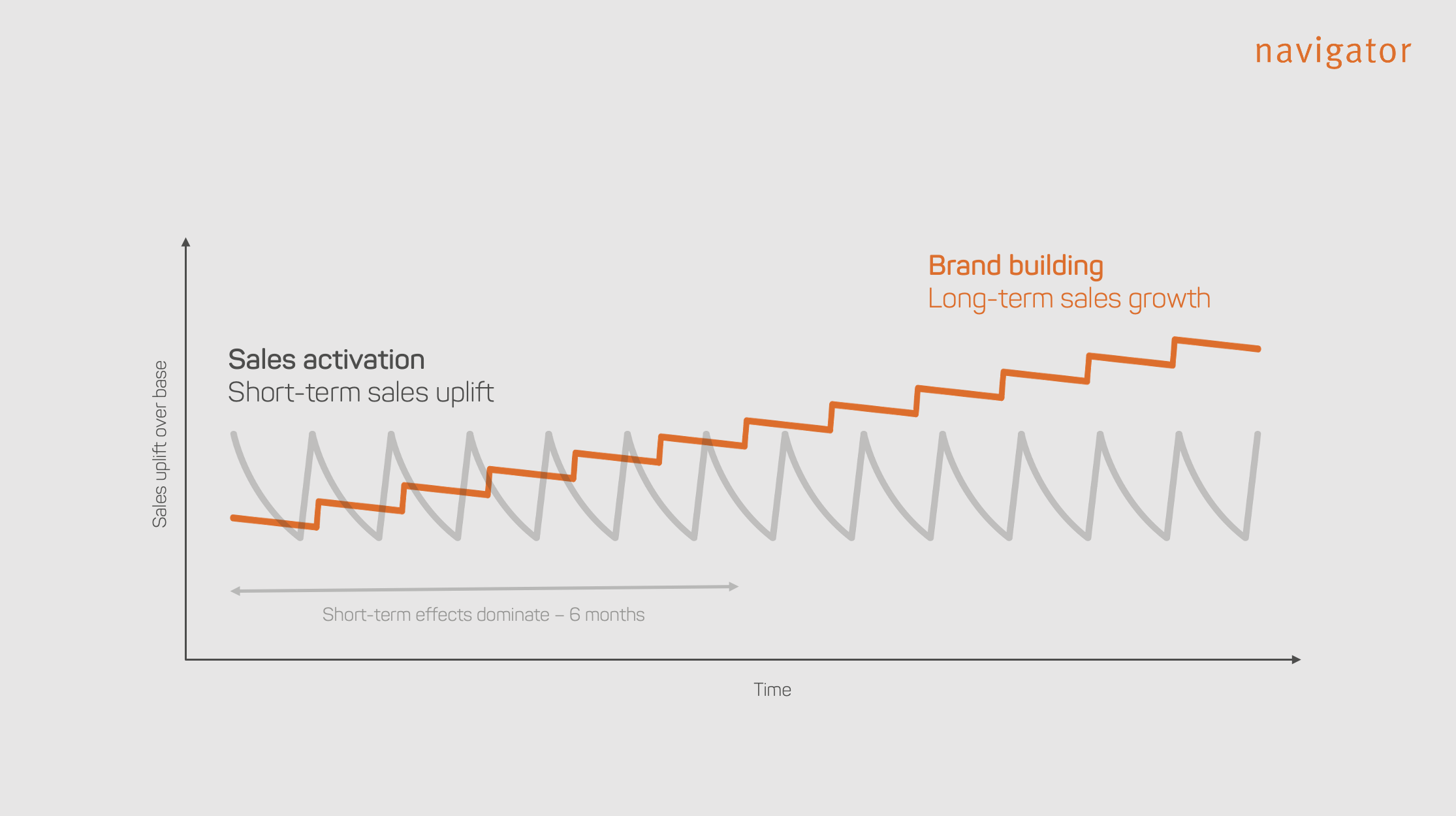
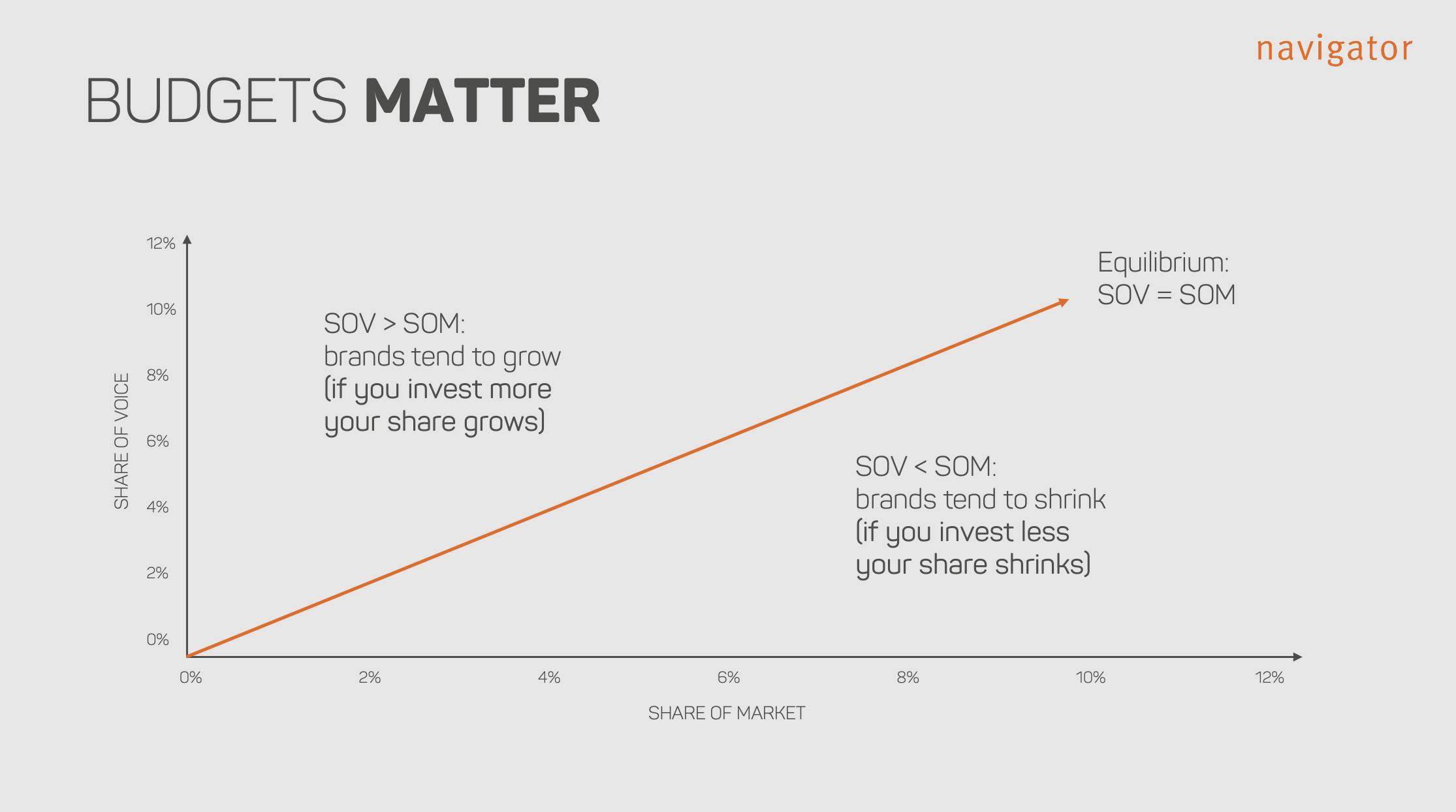
Experience from previous recessions also shows that companies can increase their share of voice by maintaining or increasing their marketing efforts, thereby taking market share from competitors. And at a lower cost than during a boom. In general, increased marketing efforts during a recession have been shown to strengthen a company's financial performance in the following years.
In a declining market, it's also important to have the right tactics, which requires you to examine how your target audiences' priorities are changing. Often their perception of what constitutes value shifts and you need to change your communications to meet them where they are. It is also important to build on trust capital, to ensure that your brand exudes confidence and empathy. But empathetic messages must also be followed by action. Letting your declining sales affect customers by increasing prices and reducing quality is not a good strategy. It is better to focus on educating customers on how to shop smarter and save money.
For those who see the opportunities, a volatile market with a lot of brakes can be the perfect opportunity to accelerate past their competitors. Or to quote Ayrton Senna again: "To come second is to come first among the losers".


Related posts

Must Win Battles, a strategically powerful approach to long-term growth and success
It’s easy to think that growth is about doing more. In practice, it’s often the opposite—it’s about prioritizing, focusing, and staying the course over time. One of the most powerful methods for achieving this is the concept of “Must Win Battles” (MWB). It involves identifying and focusing on a few critical battles that, if won, will have a transformative effect on the company’s future. This strategy has helped many companies focus their resources and energy on what truly matters, which in turn creates sustainable growth and competitive advantages.

Anfall är bästa försvar, -vad företag kan lära av sportens logik
When the market takes a downturn, it’s tempting to tighten your belt and slash the marketing budget. It may feel like a safe defensive strategy: concede fewer goals and preserve liquidity. But just like in sports, we know that a team that only plays defense will never win a league or a championship. A team that doesn’t go on the offensive, a boxer who never throws a punch, can hold out for a while, but they can never win.

Snabb strategi skapar framgångsrik exekvering
In a world where change is the only constant, having a well-formulated strategy and a solid business model is no longer enough. Rather, it is about the ability to act quickly and to make the right decisions at the right time.